
 Blog Details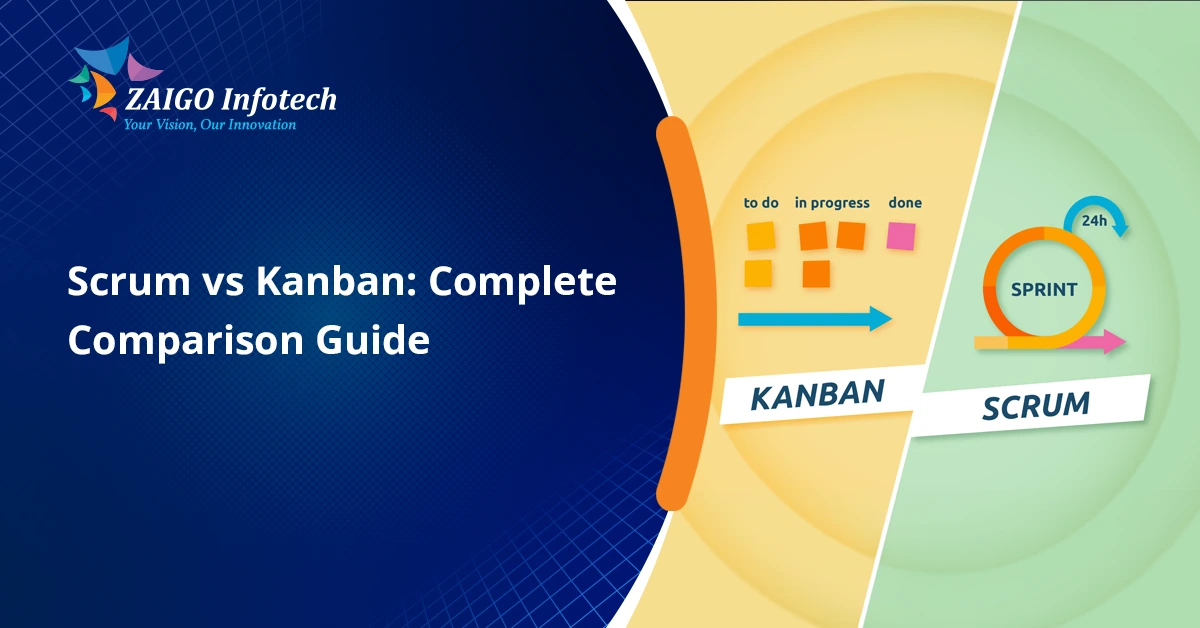
Choosing the most suitable Agile framework is crucial in ensuring successful product development in this fast-moving digital world. The confusing issue kanban vs scrum is still the main topic of conversation among product managers, developers, and even company executives.
However, the reality is that there isn’t a perfect-fit-for-everyone solution.
This detailed guide will compare the difference between Kanban and Scrum, show real-world use cases, and assist you in finding the framework that best fits your objectives for 2026.
What Is Agile and Why It Matters in 2026
To get started with kanban vs scrum, first, you need to get yourself acquainted with the basics of Agile.
The agile development process is all about delivering in small increments, working together, and being adaptable. If you’re new to Agile, exploring agile vs waterfall can help you understand why modern teams prefer flexible frameworks like Kanban and Scrum.
Key Principles of Agile
- Iterative development cycles
- Customer collaboration over contracts
- Responding to change over rigid planning
- Value delivery regularly
Scrum and Kanban are two of the many frameworks that you can use to embody the agile principles. The two, however, differ significantly in their approach and implementation.
What Is Kanban? (And Why Teams Love It)
Kanban is a workflow optimization method based on the use of visual elements to identify inefficiencies and increase effectiveness.
Core Features of Kanban
- Visual work boards
- Continuous workflow (no fixed iterations)
- Work-In-Progress (WIP) limits
- Focus on flow efficiency
How Kanban Works
Tasks are displayed on a board divided into columns, such as:
- To Do
- In Progress
- Done
This is why Kanban vs Scrum board aspects can be so intriguing, as Kanban puts the emphasis on flow rather than structure.
Benefits of Kanban
- Flexibility in task management
- Faster delivery cycles
- Easy to implement
- Best suited for maintenance and support teams
If you’re exploring deeper, understanding Kanban in agile can help you apply it effectively within modern Agile ecosystems.
What Is Scrum? (The Most Popular Agile Framework)
Scrum is a highly popular structured Agile framework that divides a project into several iterations called sprints.
Key Components of Scrum
- Sprints (1–4 weeks)
- Scrum Master
- Product Owner
- Daily stand-ups
- Sprint reviews and retrospectives
Scrum Process
Contrary to Kanban, Scrum operates in a fixed loop:
- Sprint Planning
- Sprint Execution
- Daily Scrum Meetings
- Sprint Review
- Retrospective
This structured approach makes scrum vs kanban board comparisons particularly important for teams choosing between flexibility and predictability.
Benefits of Scrum
- Transparent roles and clear responsibilities
- Predictable delivery cycles
- Strong team collaboration
- Continuous improvement through retrospectives
Kanban vs Scrum: Key Differences Explained
Understanding the difference between Kanban and Scrum will help you make a well-thought-through decision.
1. Workflow Structure
Kanban
- Continuous flow
- No fixed iterations
Scrum
- Time-boxed sprints
- Start and end dates defined
2. Flexibility
Kanban
- Highly flexible
- Tasks can be added anytime
Scrum
- Less flexible during sprints
- Changes are limited until the next sprint
3. Roles
Kanban
- No predefined roles
Scrum
- Scrum Master
- Product Owner
- Development Team
4. Board Management
Kanban vs Scrum Board Comparison
5. Metrics
Kanban
- Lead time
- Cycle time
Scrum
- Velocity
- Sprint burndown
Kanban vs Scrum Board: Visual Comparison
There are several differences when you compare a kanban vs scrum board. First and foremost, how work is visualized and managed is a big difference.
Kanban Board
- Continuous task movement
- Focus on flow
- No reset
Scrum Board
- Reset after each sprint
- Focus on sprint goals
- Structured backlog
Teams with fluctuating workloads will find this factor very determining when making a scrum vs kanban board decision.
Agile vs Kanban vs Scrum: What’s the Real Difference?
Many teams get mixed up here.
Agile
- Philosophy or mindset
Kanban
- Workflow management method
Scrum
- Structured Agile framework
In short:
- Agile = Principles
- Kanban = Flow optimization
- Scrum = An iterative delivery system
Knowing agile vs kanban vs scrum will enable organizations to link their strategy to their execution.
When to Use Kanban
Kanban is an ideal option for:
- Support and maintenance teams
- Continuous delivery environments
- Projects with unpredictable workloads
Ideal Use Cases
- IT support teams
- DevOps pipelines
- Bug tracking systems
Kanban shines where flexibility and speed are more important than strictly following timelines.
When to Use Scrum
Scrum works best for:
- Product development teams
- Projects with clear goals
- Teams that benefit from structure
Ideal Use Cases
- Software development
- Feature releases
- Startup product builds
If custom software development services are your field, Scrum could be the framework that brings you discipline and predictability.
Can You Combine Kanban and Scrum? (Scrumban Explained)
Yes, and quite a lot of teams do.
Scrumban is a hybrid approach that combines:
- Scrum’s structure
- Kanban’s flexibility
Benefits of Scrumban
- Improved workflow efficiency
- Better adaptability
- Reduced bottlenecks
This hybrid model will continue to grow in popularity as of 2026 as teams look for a middle ground between control and agility.
Common Mistakes Teams Make
Even very experienced teams make mistakes when deciding Kanban vs Scrum.
1. Choosing Based on Trends
Just because Scrum is widely used, it doesn’t mean that it’s the one for you.
2. Ignoring Team Size
Scrum works best for small teams, while Kanban scales easily.
3. Misunderstanding Agile
Many confuse frameworks with the Agile philosophy itself.
Kanban vs Scrum: Pros and Cons
Kanban Pros
- Flexible
- Easy to implement
- Continuous delivery
Kanban Cons
- Less predictability
- No defined roles
Scrum Pros
- Structured workflow
- Clear accountability
- Regular feedback loops
Scrum Cons
- Requires discipline
- Less flexible mid-sprint
How to Choose Between Kanban and Scrum
Here’s a simple decision framework:
Choose Kanban If:
- Your work is continuous
- Priorities change frequently
- You need flexibility
Choose Scrum If:
- You have defined goals
- You want structured delivery
- Your team thrives on routine
Real-World Example: Kanban vs Scrum in Action
Imagine two teams:
Team A (Kanban)
- Handles customer support tickets
- Needs quick turnaround
- Works continuously
Team B (Scrum)
- Builds a mobile app
- Works in 2-week sprints
- Delivers features incrementally
If your focus is on Flutter app development services, Scrum can structure the release of features effectively, just as Kanban can be great for maintenance after launch.
The Future of Agile: What’s Changing in 2026?
The argument of kanban vs scrum continues to spin.
Trends to Watch
- Hybrid frameworks (Scrumban)
- AI-driven workflow optimization
- Increased focus on value delivery
- Integration with software architecture consulting
More and more companies are not chasing a single framework but are instead embracing flexibility.
Final Verdict: Kanban vs Scrum — Which Is Better?
The kanban vs scrum debate does not have a globally accepted winner at the moment.
Kanban wins for flexibility and continuous delivery
Scrum wins for structure and predictability
The best choice depends on your:
- Team size
- Project type
- Workflow complexity
In many cases, combining the two often gives the best result.
Conclusion
Choosing between kanban vs scrum is not about picking the “best” framework; it’s about choosing the right one for your team.
Learning how to differentiate between Kanban and Scrum, taking a deep dive into your process, and following the values of Agile can help you a lot in terms of productivity and delivery success. Whether you are dealing with agile and kanban methodologies or looking at more structured frameworks like scrum, the essence is continuous improvement.
FAQs – Kanban vs Scrum
1. What is the main difference between Kanban and Scrum?
The main distinction between Kanban and Scrum is that Kanban supports uninterrupted flow and offers high flexibility, whereas Scrum farms out work in fixed-length time intervals called sprints and has well-defined roles and tightly controlled procedures.
2. Which is better: Kanban or Scrum?
The kanban vs scrum debate may not be solved by a one-size-fits-all solution. Kanban is perfect for teams who value flexibility and continuous delivery, whilst Scrum is better suited for teams who want structured development cycles and predictable results.
3. Can Kanban and Scrum be used together?
Yes, some teams adopt a combination of both frameworks via a hybrid approach called Scrumban. This way, the team can enjoy the structure of Scrum and, at the same time, retain the flexibility of Kanban, which is why it is widely used in modern Agile and Kanban methodologies.
4. What is the difference between a Kanban board and a Scrum board?
The primary kanban vs Scrum board difference is the manner in which the work is controlled. A Kanban board is ongoing and highlights the flow of work with work-in-progress (WIP) limits, whereas a Scrum board is wiped clean each time and tracks tasks inside a fixed sprint backlog.