
 Blog Details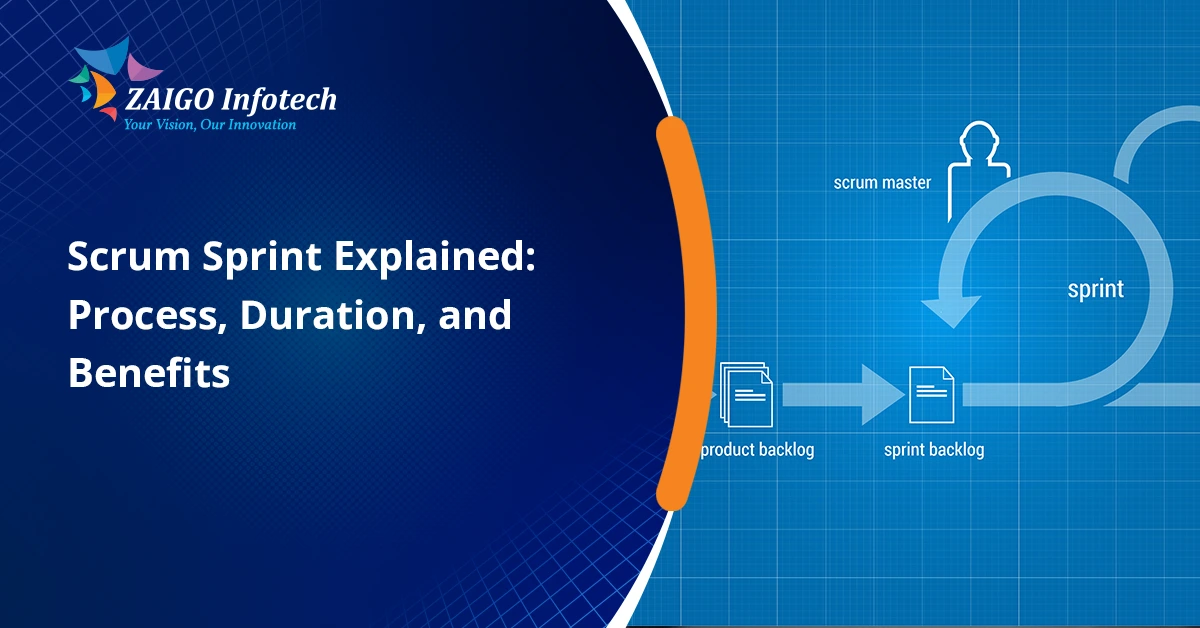
In the current rapidly changing digital landscape, companies are competing to introduce enhanced products at a quicker pace than ever before. This is precisely why Agile, and more particularly Scrum, have become so essential. If you have ever thought about what is a sprint in agile, you can consider this article as your ticket to the ultimate, simplest, and still very powerful explanation of a sprint in an agile environment.
Regardless of your role, startup owner, programmer, or production lead, becoming familiar with sprint cycles might be the game-changer for your team to successfully build, test, and roll out the product. We are going to thoroughly explore the sprint in agile methodology and find out how the best teams are using it to keep their lead in 2026.
What is a Sprint in Agile?
Simply put, a sprint is a fixed, short period during which a Scrum group aims to finish a certain quantity of work.
Sprint Definition Agile
The sprint definition (agile) can be summed up as:
An iteration of fixed duration (usually 1-4 weeks) where a team produces a drop of the product that can be used.
So, what is a sprint in agile software development should be visualized as a small project that has a well-defined objective, timeline, and outcome.
Why Sprints Are the Backbone of Agile Success
Just knowing what is an agile sprint won’t get you too far. The real magic lies in why sprints are so effective.
Key Benefits of Sprint Cycles
- Faster product delivery
- Continuous feedback and improvement
- Reduced project risk
- Better team collaboration
- Increased transparency
Sprint cycles help teams to divide complex projects into smaller parts, thus making agile development more efficient and predictable.
How Sprint Cycles Work (Step-by-Step Process)
To fully understand the sprint agile methodology, let’s walk through the full sprint lifecycle.
1. Sprint Planning
This is where everything begins.
- Define sprint goals
- Select backlog items
- Estimate effort
- Assign responsibilities
The team decides what needs to be built in the time frame.
2. Daily Scrum (Stand-Up Meetings)
Daily Scrum meetings happen every day and last no more than 15 minutes.
Each person shares:
- What they did yesterday,
- What they’ll do today.
- Were there any blockers?
This ensures smooth execution throughout the sprint cycles.
3. Sprint Execution
This is the actual work phase.
Developers, designers, and testers work together to finish assigned tasks. Teams often rely on the Scrum agile method to ensure alignment and efficiency during this stage
4. Sprint Review
At the end of the sprint, teams:
- Demonstrate completed work
- Gather stakeholder feedback
- Validate outcomes
This step ensures that the increment meets expectations.
5. Sprint Retrospective
This is where continuous improvement happens.
Teams discuss:
- What went well
- What didn’t
- What can be improved
That’s a key part of agile sprint success. It helps keep performance steady over time.
Ideal Sprint Duration: How Long Should a Sprint Be?
One of the most common questions in what is a sprint in agile software development is about duration.
Standard Sprint Lengths
- 1 week – Fast-moving projects
- 2 weeks – Most common choice
- 3–4 weeks – Complex projects
Choosing the Right Duration
Factors to consider:
- Project complexity
- Team experience
- Stakeholder involvement
- Feedback cycles
Shorter sprints give quicker feedback loops. Longer ones let teams dive deeper into complex features
Key Roles in a Scrum Sprint
Understanding roles in Scrum is essential in the agile sprint methodology.
1. Product Owner
- Defines priorities
- Manages backlog
- Ensures business value
2. Scrum Master
- Facilitates the process
- Removes blockers
- Ensures Agile principles are followed
3. Development Team
- Builds and delivers the product
- Self-organized and cross-functional
These roles form a collaborative circle to make sure each sprint adds value.
Common Challenges in Sprint Cycles (And How to Overcome Them)
Even strong teams face issues when implementing sprint cycles
1. Scope Creep
Problem: Adding tasks mid-sprint
Solution: Stick to sprint goals and backlog priorities
2. Poor Planning
Problem: Unrealistic workload
Solution: Use historical data for better estimation
3. Communication Gaps
Problem: Misalignment within the team
Solution: Regular stand-up meetings and collaboration tools work well
4. Lack of Clear Goals
Problem: Sprint targets are not defined
Solution: Define SMART goals for sprints
Best Practices to Maximize Sprint Efficiency
If you truly want to master what is agile sprint, follow these expert tips:
Keep Sprints Time-Boxed
Don’t make a sprint longer. Keep it consistent.
Prioritize Backlog Effectively
Give highest priority to tasks that deliver the most value.
Use Agile Tools
Jira, Trello, and ClickUp are some examples of tools that make sprint management more efficient.
Focus on Deliverables, Not Tasks
It’s about having a piece of working product, not just checking off tasks.
Encourage Team Collaboration
Teams with different skills working together produce better results in sprints.
Sprint vs Iteration: Are They the Same?
This is a common confusion
- Sprint: Used in the Scrum framework
- Iteration: Generic Agile term
While similar, sprints follow a strict structure and include defined ceremonies.
Real-World Example of a Scrum Sprint
Imagine a business that is developing a mobile app through Flutter app development services.
Sprint Goal:
Develop user login and authentication features.
Sprint Breakdown:
- UI design for login screen
- Backend authentication setup
- API integration
- Testing and bug fixes
As a result of the sprint, the login feature that is complete and fully functional is delivered.
This is a great instance of what is a sprint in agile software development.
How Sprints Support MVP Development
Sprints are crucial when building MVPs (Minimum Viable Products).
Using MVP development services, teams can:
- Quickly validate ideas
- Launch faster
- Gather real user feedback
- Iterate based on insights
Each sprint adds incremental value, which results in the MVP development becoming both quicker and more efficient.
Sprint Agile Methodology in Custom Software Development
When it comes to custom software development services, sprint cycles ensure:
- Faster turnaround time
- Better client collaboration
- Continuous improvements
- High-quality deliverables
Organizations using Agile sprints are able to respond rapidly to new requirements.
Role of Sprints in Software Outsourcing
For companies using software outsourcing solutions, sprint cycles offer:
- Clear communication with remote teams
- Transparent progress tracking
- Predictable delivery timelines
This makes outsourcing more reliable and efficient.
Agile Development and Sprint Integration
Sprints are the heartbeat of agile development.
They allow teams to:
- Build incrementally
- Test continuously
- Deliver consistently
When Agile is not divided into sprints, it loses both its structure and effectiveness.
Tools That Enhance Sprint Management
To optimize sprint cycles, teams often use:
- Jira – Sprint planning & tracking
- Trello – Task visualization
- Asana – Workflow management
- ClickUp – All-in-one productivity
These are collaboration tools that help ensure the operations go without a hitch.
Future of Scrum Sprints in 2026 and Beyond
As technology evolves, so does Agile.
Emerging Trends:
- AI-powered sprint planning
- Predictive analytics for estimation
- Automated testing within sprints
- Remote-first Agile teams
Although the fundamental idea of a sprint in agile doesn’t change, the implementation of tools and techniques will always be changing.
Conclusion: Why Scrum Sprints Are Non-Negotiable in 2026
Now you must be clear about what is a sprint in agile and why it is so vital for modern software development.
Besides driving collaboration and accelerating delivery, sprint cycles are the main source of power for Agile teams that are successful. So, no matter if your focus is on startups, enterprise solutions, or digital products, the sprint agile methodology mastery can greatly enhance your results.
Should you want to put Agile into operation in a way that you gain from their experience, take a look at how Zaigo Infotech may assist you in re-shaping your development process through state-of-the-art solutions.